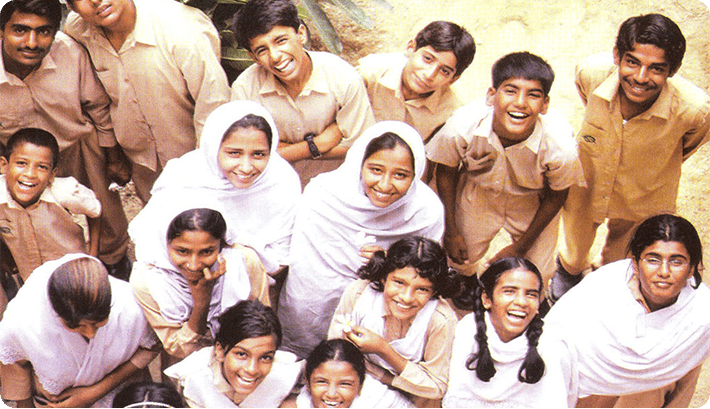
Every problem starts with a child who never went to school
Health, poverty, peace, opportunity. Trace any of them back far enough, and you find the same missing piece. In Pakistan, that missing piece touches more than 25 million children.
A crisis hiding in plain sight
Pakistan faces some of the most complex challenges to educating its children anywhere in the world.
Source: UNICEF
A system running on too little
Millions more children are in school, but not learning at the level they could be. Pakistan's public education system faces deep structural challenges, from governance gaps to teacher absenteeism, compounded by chronically low investment: historically around 1.5% of GDP, already well below the SDG-4 benchmark of 4-6%.
This crisis doesn't only affect children, it shapes the country's health outcomes, economic participation, and social mobility. Building a stronger education system is vital for a more inclusive and resilient Pakistan.
0.8% of GDP spent on education in 2024–2025, a historic low.
Source: UNICEF
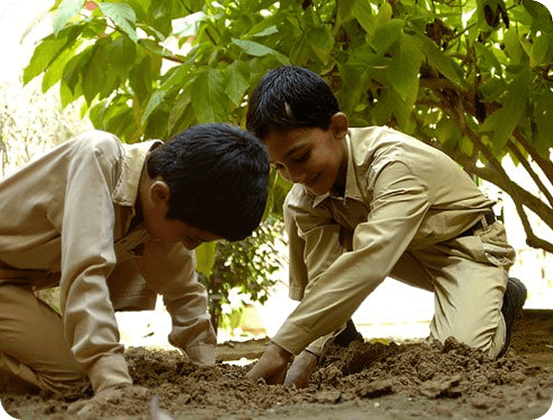
Change Begins with Education
Education isn't just literacy. It's the root system beneath a healthier, more equal, more peaceful, and more prosperous Pakistan, a change that ripples outward from a single child to a family, a community, and eventually a generation.
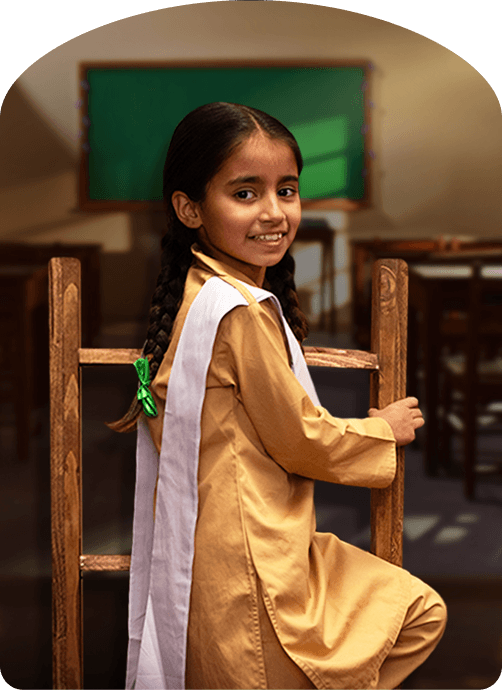
Health
A more educated mother is more likely to see her children live past the age of five, and to raise them healthier from the start.
Source: UNESCO
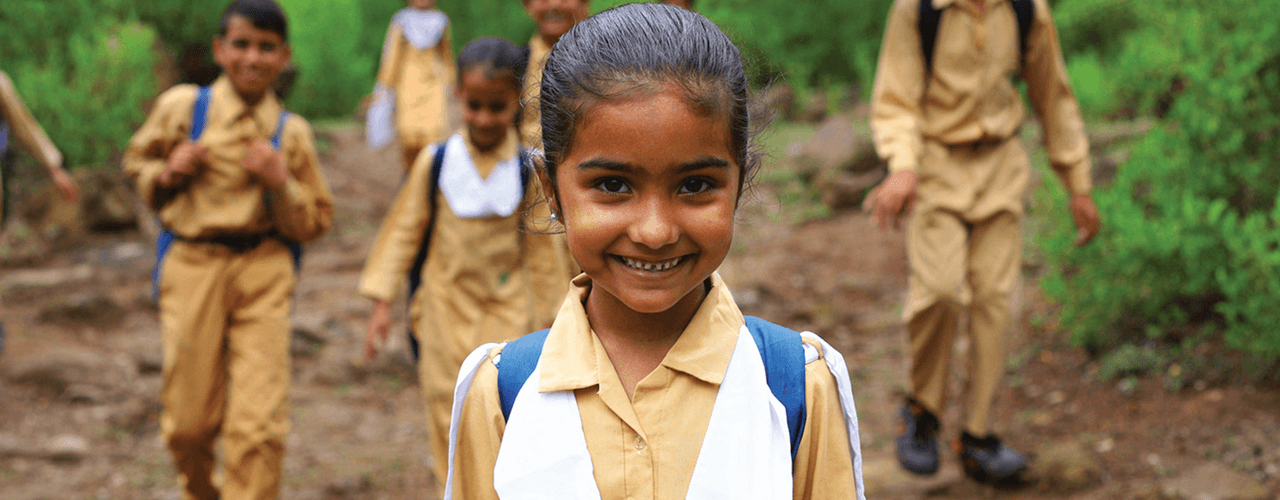
Economy
In developing countries, every dollar spent on education returns $10 to $15 in economic growth, lifting entire households out of poverty over time.
Source: UNESCO
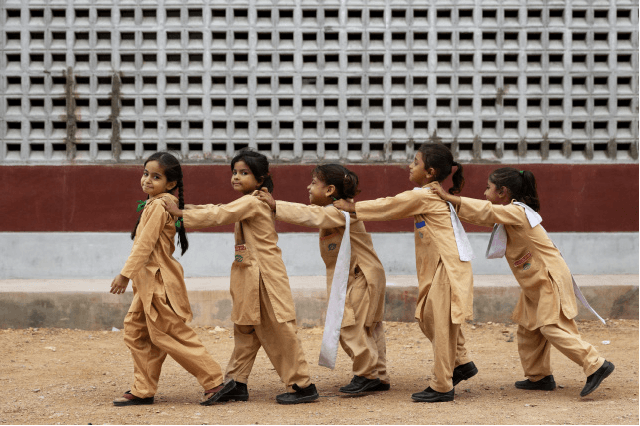
Peace & Stability
Communities with stronger access to education see less conflict, and more tolerance across the lines that used to divide them.
Source: UNESCO
Women's Empowerment
When girls stay in school, they gain the confidence and agency to shape decisions about their own lives, rather than have them made for them.
Source: UNESCO
One school became a movement
A network of schools and communities, built one child at a time.
 2,261School Units
 320,000Students Enrolled
 71,000Graduates
 16,000All Female Faculty Members
 61Districts
 94%Matriculation Pass Rate
What this actually takes
Our schools are built within walking distance of homes, with secure campuses and all-female faculty that create environments where children learn with confidence.
Education is kept affordable for every family through subsidised fees, supported by strong teacher training and monitoring that keeps quality consistent. And by partnering closely with families, especially mothers, we help children enrol, stay in school, and thrive.

Help bring education to every child
Our work to close the education gap needs your support. You can help provide opportunity, confidence, and a future, especially for the children Pakistan's system leaves behind.